Relations interspécifiques, ne pas maintenir en présence de :
Don't get on well with other blennies, except in a large volume aquarium.
Dimorphisme sexuel :
No
Zone de vie dans l’aquarium :
Rocks
Conseils de nos experts :
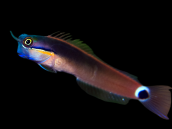
Ecsenius Stigmatura is one of the prettiest blennies and the most appreciated by the aquariophiles, even if it is not very commonly available in the trade. A consumer of filamentous algae, she will be useful for any aquarium that would suffer from episodes of algal proliferation. But she is also a host of choice, even when we don't have that kind of problems in the aquarium. Almost always present well in view of the decor, Ecsenius Stigmatura has its favorite observations, on which it spends a good part of the day. In the natural environment, she lives in large tubicoles, like protula, or dead bivalve shells. Offer it such a shelter, or failing that a section of adequate diameter pvc tube, skillfully integrated between the anfracuction of living rocks, in height, will make Ecsenius stigmatura the most "happy" of your residents, even if it can be satisfied of a hole in a rock or interstices offered by the establishment of corals. Reactive and always on the lookout, she quickly recognizes her healer, and often makes "calls" in the form of small leaps and short moments of swimming, when he observes the aquarium (probably hoping for a little food. It is A fish that quickly acclimatizes to its new environment and will quickly eat inert foods, first thawed meat cubes (Artemia, Mysis, Krill chopped ...), then dry food (granules and glitter). All the Blennies need on the one hand vegetable in their diet. They graze on the micro-algae on the rocks, and at the foot of the corals: we must not be alarmed if we observe Ecsenius stigmatura biting at the foot of a coral, if it is properly nourished, it does not attack This one, but finds small algae as close to the feet. On the other hand, if you do not offer her vegetable ration according to his needs, you will actually see real attacks on hard corals, because the Blennie will try by all means of obtaining the nutrients she needs. In addition to these attacks on Anthozoa, his metabolism would suffer from deficiencies and his life expectancy would be greatly shortened. To avoid this, it will be very simple to offer it adequate plant foods. In mature aquariums normally poor in algae, we recommend that you distribute pellets or spirulina flakes on a daily basis (where the "spirulina formula" or "herbivorous fish formula") is made. If large herbivorous fish are present in the aquarium, and you distribute dried nori leaves regularly, you will see the Blennie coming to eat it.
The signs of sexual dimorphism are not very apparent, except on the adult subjects that can be compared, because the female is smaller. If you want to accommodate a pair of blennies, locate two specimens that have been tolerating for a while in a sales tray (ask the seller if they have been together for at least a few days), it is a male/female pair, because Two males would inevitably fight. If they are hosted together, a sexual pair of the same species must have space to separate occasionally: they will not be installed in less than 300 liters. On the other hand, we will absolutely avoid associations of different species, less than a very large aquarium (at least 1,000 liters), to obtain two vast territories available
His average life expectancy is 5 to 8 years.
Paramètre physico chimique de l’eau :
Temperature 24-27 ° C, salinity 1.022-1.024, pH 8.0-8.4, KH 6-10, mg 1200-1400, CA 400-480, No3> 10, PO4> 0.05